Gluten Free French Buttercream Macarons
Gluten-free macarons are delicate French sandwich cookies made with almond flour, powdered sugar, and whipped egg whites. The shells are naturally gluten-free, but the technique takes practice. This version is filled with a white-chocolate
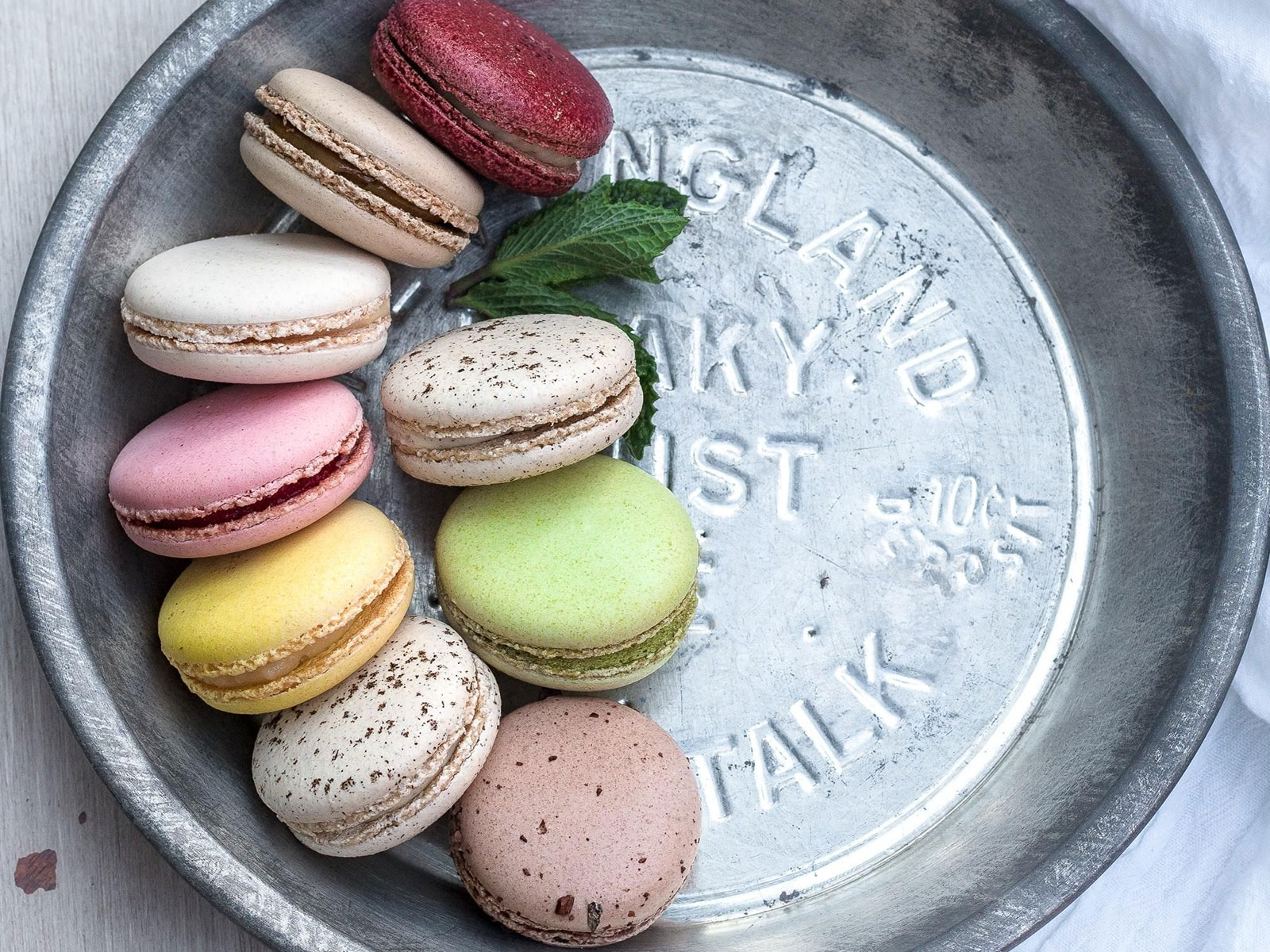
Gluten-free macarons are delicate French sandwich cookies made with almond flour, powdered sugar, and whipped egg whites. The shells are naturally gluten-free, but the technique takes practice. This version is filled with a white-chocolate cream and works well as a make-ahead dessert.
This recipe makes a small batch (about 4 servings of filled macarons) and takes around 30 minutes of active work. Macarons are technique-sensitive, so the sections below cover the steps, troubleshooting, and storage to help you get a better result each time.
Recipe
Gluten-Free French Macarons
This step by step tutorial will show you how to make gluten-free macarons from scratch.

Ingredients
- 125 g egg white
- 125 g almond powder
- 200 g granulated sugar
- 125 g powdered sugar
Method
- Egg whites and sugar are whisked together.
- Almond meal and powdered sugar should be combined.
- Combine all the other ingredients, place greaseproof paper on the tray, and squeeze a round shape out of the mixture using a piping bag.
- Bake for 15 minutes at 160°C (360°F).
- Then, with the oven door open, bake for a further 3 to 5 minutes.
For the cream
- Bring cream and a vanilla stick to a boil. Melt the chocolate and butter together.
- Give it time to cool.
- Using a piping bag, (or similar thing) insert the filling into the macarons' centers.
Nutrition (per serving)796 kcal· 1 serving
Estimated. Numbers come from the original recipe and may not be exact.
Why This Gluten-Free Macarons Recipe Works
Almond flour is the traditional base for French macaron shells, so this is one of the few classic French pastries that is gluten-free by design. The structure comes from a meringue (whipped egg whites and sugar) folded into a sifted almond flour and powdered sugar mixture.
Careful folding (called macaronage), a short rest before baking, and a steady oven temperature are the three things that make the biggest difference to the shells. The white-chocolate cream filling balances the sweetness of the shells and is easier to make than a classic French buttercream.
Ingredient Notes
Almond flour (almond powder): use blanched, finely ground almond flour. Coarser almond meal will leave a grainy shell. Sift it with the powdered sugar before mixing.
Egg whites: aged egg whites (separated and left covered in the fridge for 1–2 days) tend to whip more stably for macarons. Bring them to room temperature before whipping.
Granulated and powdered sugar: granulated sugar goes into the meringue; powdered sugar is sifted with the almond flour. Some powdered sugars contain cornstarch or wheat starch; check the label if a gluten-free product is needed.
White chocolate and cream: use a good-quality white chocolate so the filling sets well. The cream is heated and poured over the chopped chocolate to melt it. The added butter gives the filling a softer, spreadable texture.
Vanilla: the recipe uses one pack of vanilla sugar or vanilla powder. A scraped vanilla pod or 1 teaspoon of pure vanilla extract works as a substitute. Check the label for any flavorings if a gluten-free product is needed.
How to Make Gluten-Free Macarons
The short version: sift the dry ingredients, whip the meringue, fold the two together (macaronage), pipe small rounds onto a lined tray, let them rest until the tops feel dry, and bake. While the shells cool, make the white-chocolate cream filling, let it thicken, and sandwich the shells together.
The full step-by-step is in the recipe card above. Read through the whole method once before starting so the meringue does not sit while you measure ingredients.
Macaronage Tips
Macaronage is the folding step where the meringue and dry ingredients come together. The batter should flow off the spatula slowly in a thick ribbon that settles back into itself within about 10 seconds.
Under-mixed batter holds peaks and gives rough or bumpy shells. Over-mixed batter is thin and spreads, giving flat shells with no feet. Stop folding as soon as the batter reaches a slow lava-like flow, and scrape the bowl gently with each fold.
Troubleshooting Gluten-Free Macarons
Cracked shells: the most common causes are skipping the rest step, oven that runs too hot, or over-whipped meringue. Try resting the shells longer until the tops feel dry, and check oven temperature with a thermometer.
No feet: usually a sign of over-mixed batter, a short rest, or an oven that is too cool. Try a slightly shorter macaronage and give the piped shells more rest time before baking.
Hollow shells: can come from under-baking, over-whipped meringue, or batter that is too loose. Try baking for an extra minute or two and check that the shells lift cleanly from the parchment.
Lopsided shells: often a piping or oven issue. Hold the piping bag straight up, pipe quickly, and tap the tray firmly on the counter to release air bubbles before resting.
Sticky bottoms: the shells need more baking time. Bake until the shells lift cleanly off the parchment without tearing.
Grainy texture: coarse almond flour is usually the cause. Pulse the almond flour and powdered sugar together in a food processor, then sift, before folding into the meringue.
Filling Tips
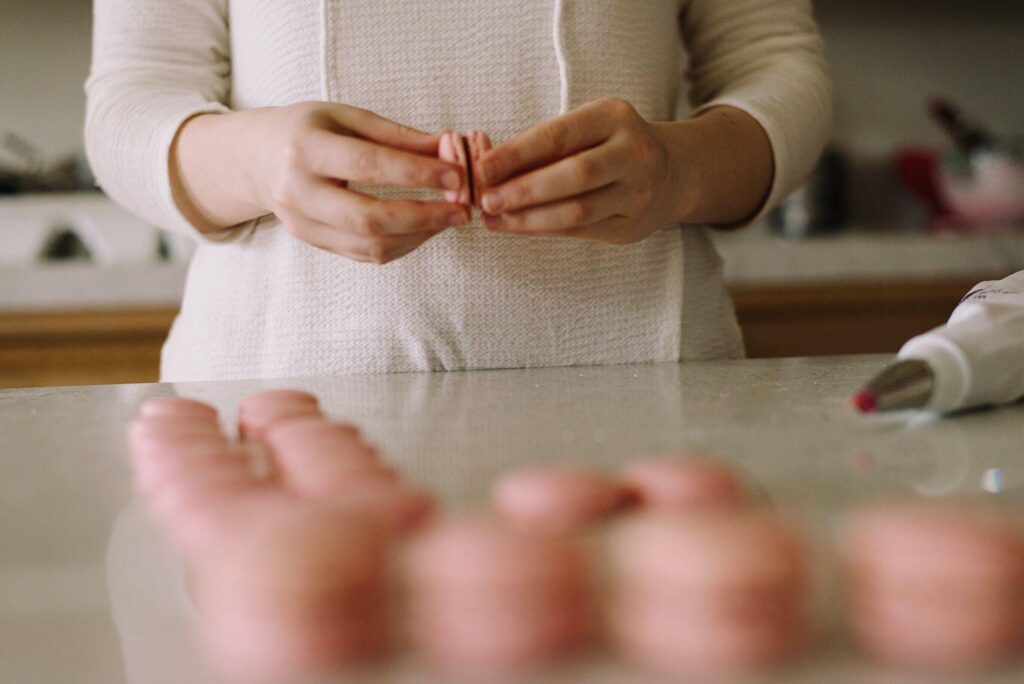
The white-chocolate cream filling needs to cool to a thick, spreadable consistency before piping. If it is too warm, it will run out of the shells; if it is too cold, it will tear the shells when piped.
Do not overfill the macarons. A small amount of filling in the center is enough; the shells should still meet at the edges. Overfilled macarons spread, get sticky, and are harder to store.
If you prefer a traditional French buttercream rather than the white-chocolate cream above, you can swap in a buttercream of your choice. Keep the filling amount the same and chill the assembled macarons before serving.
Storage and Freezing
Refrigerator: store filled macarons in an airtight container in the refrigerator for up to 3 days. Bring them to room temperature for about 15–20 minutes before serving so the shells soften slightly and the filling becomes creamy.
Maturing: macarons usually taste better the day after filling. Resting in the fridge overnight lets the filling soften the inside of the shells slightly, giving the classic crisp-outside, chewy-inside bite.
Freezer: macarons freeze well. Place them on a tray to freeze, then transfer to an airtight container with parchment between layers. They keep for up to 1 month. Thaw in the refrigerator before bringing to room temperature.
Unfilled shells: baked shells can be stored in an airtight container at room temperature for 1–2 days, or frozen for longer storage, and filled when needed.
More Gluten-Free Dessert Ideas
If you enjoyed this recipe, browse more gluten-free dessert recipes for cakes, cookies, and treats.
For more pastry-style bakes and method notes, see our gluten-free baking section.
You can also find the full library of gluten-free recipes, or try our gluten-free donuts for another almond-flour-based sweet bake.
FAQ
Frequently asked questions
Are macarons usually gluten-free?
Traditional French macaron shells are made with almond flour, powdered sugar, and egg whites, so the shells are usually gluten-free. Fillings, flavorings, food coloring, and bakery cross-contact can vary, so always check ingredients and labels.
Why did my macaron shells crack?
Cracking is most often caused by skipping the rest step before baking, oven temperature that is too high, or batter trapped air. Let piped shells rest until the tops feel dry, tap the tray firmly to release bubbles, and check oven temperature with a thermometer.
Why do my macarons have no feet?
The most common reasons are over-mixed batter (too thin), too short a resting time, or an oven that is too cool. Stop the macaronage a little earlier and rest the piped shells longer until the tops feel dry to the touch.
Can I freeze gluten-free macarons?
Yes. Both unfilled shells and fully filled macarons freeze well. Store them in an airtight container with parchment between layers for up to 1 month. Thaw in the refrigerator, then bring to room temperature before serving.